
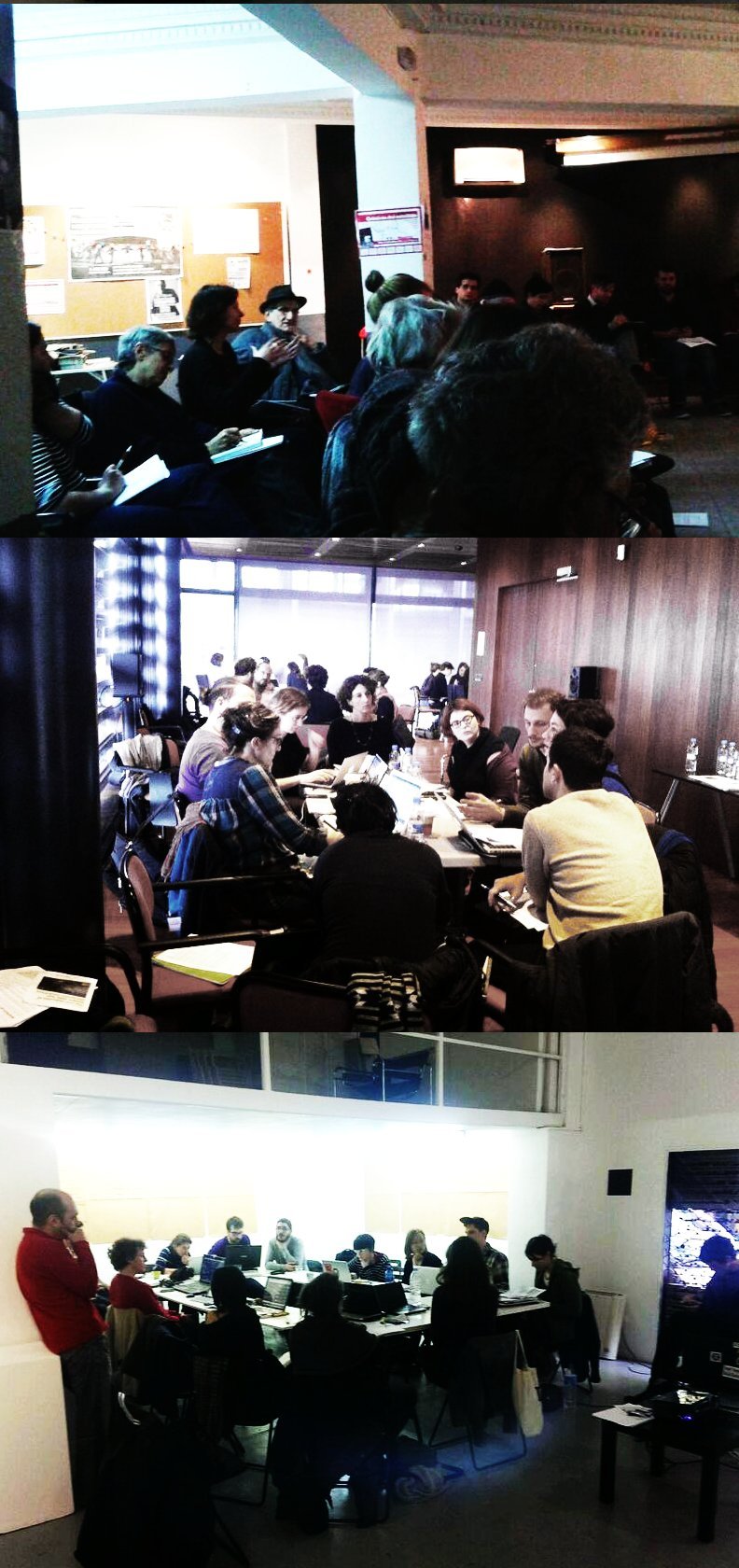
During the last weekend of February a European meeting to discuss the ongoing financial abduction of Europe was held in Madrid. The objective of the meeting –continuing and connecting with other processes such as Agora99– was and is to create common notions, roadmaps and replicable strategies between the struggles on the continent. Some 300 to 400 persons took part in the public sessions held in the museum of contemporary art Reina Sofía, and approximately 140 activists, researchers, cultural producers, citizen journalists and hackers worked divided into five workshops: cultural production, commons, debt, technopolitics and democracy.
In this weeks Totuusradio we transmit a selection of material on and from the meeting. The programme consists of a selection of the panel discussions, five interviews with the participants of the workshops, and interviews with two of the panelists, Montserrat Galcerán and Antonio Negri.
The programme is fully in English and has been recorded previously. You can comment on the comments section. The web page of the New Abduction of Europe can also be visited here. The meeting was organized by the Foundation of Commons.
-
Broadcast 1: Monday 10th of March 2014, 22:00–00:00 (UTC+2)
-
Broadcast 2: Friday 15th of March 2014, 22:30–00:30 (UTC+2)
-
Frequency: FM 98,4 (only in Tampere, Finland)
-
Internet broadcasting: TUNEIN
-
The programme will be listenable and downloadable after the 2nd broadcast in the programme archive (ohjelma-arkisto).

Manifesto of the New Abduction of Europe
The project of a united Europe, as conceived after the Second World War, is largely exhausted. Little credibility remains in the fictions of that “cunning of European reason” that believed it could overcome the causes of the continent’s historical tragedy (war, dictatorship and fascism, exploitation and inequality, colonialism and racism) by emphasising the virtues of “social market economy” and the old geopolitical combination of the States, rather than through a decisive constituent proposal. The causes of this situation are varied and enormously complex, but from the historical point of view, it is possible to identify certain landmark events in this long agony. On the one hand, the fall of the Berlin Wall and the end of the Cold War, which reduced the need for a united Europe that was equally anti-Soviet and antifascist, and on the other, the shift towards neoliberal ideas in the EU process during the 90s and the failure of the European Constitution process, which contributed to a generalised feeling of indifference among the citizenry and disenchantment with the European project. This explains the establishment, under the pretext of the global debt crisis, of what Étienne Balibar has called the “commissarial dictatorship” of the Troika.

Jatka lukemista ”How to Battle the New Abduction of Europe?”